We are pleased to announce the publication of the peer-reviewed research article “Vegetation Structure and Disturbance Drivers on a Closed Municipal Solid Waste Landfill in Kokshetau (Akmola Region, Kazakhstan)”, published in Sustainability (MDPI) on 12 February 2026 (Volume 18, Article 1901). The paper is open access under a CC BY license.
This study was developed through international cooperation between researchers from Kokshetau University Named after Sh.Ualikhanov, Universitat Politècnica de València (UPV) (IIAMA), and the University of the Azores, reflecting the LESLIE commitment to evidence-based solutions for environmental management and sustainable land recovery.
 Closed municipal solid waste (MSW) landfills are hotspots of anthropogenic disturbance and can remain environmentally unstable for decades, especially in semi-arid steppe/forest-steppe climates where water limitation, substrate heterogeneity, and ongoing informal dumping constrain ecological recovery. This work provides a first detailed baseline of spontaneous vegetation on a closed MSW landfill near Kokshetau, Kazakhstan, and proposes a restoration-oriented monitoring and target-setting workflow to support phytoremediation and rehabilitation planning.
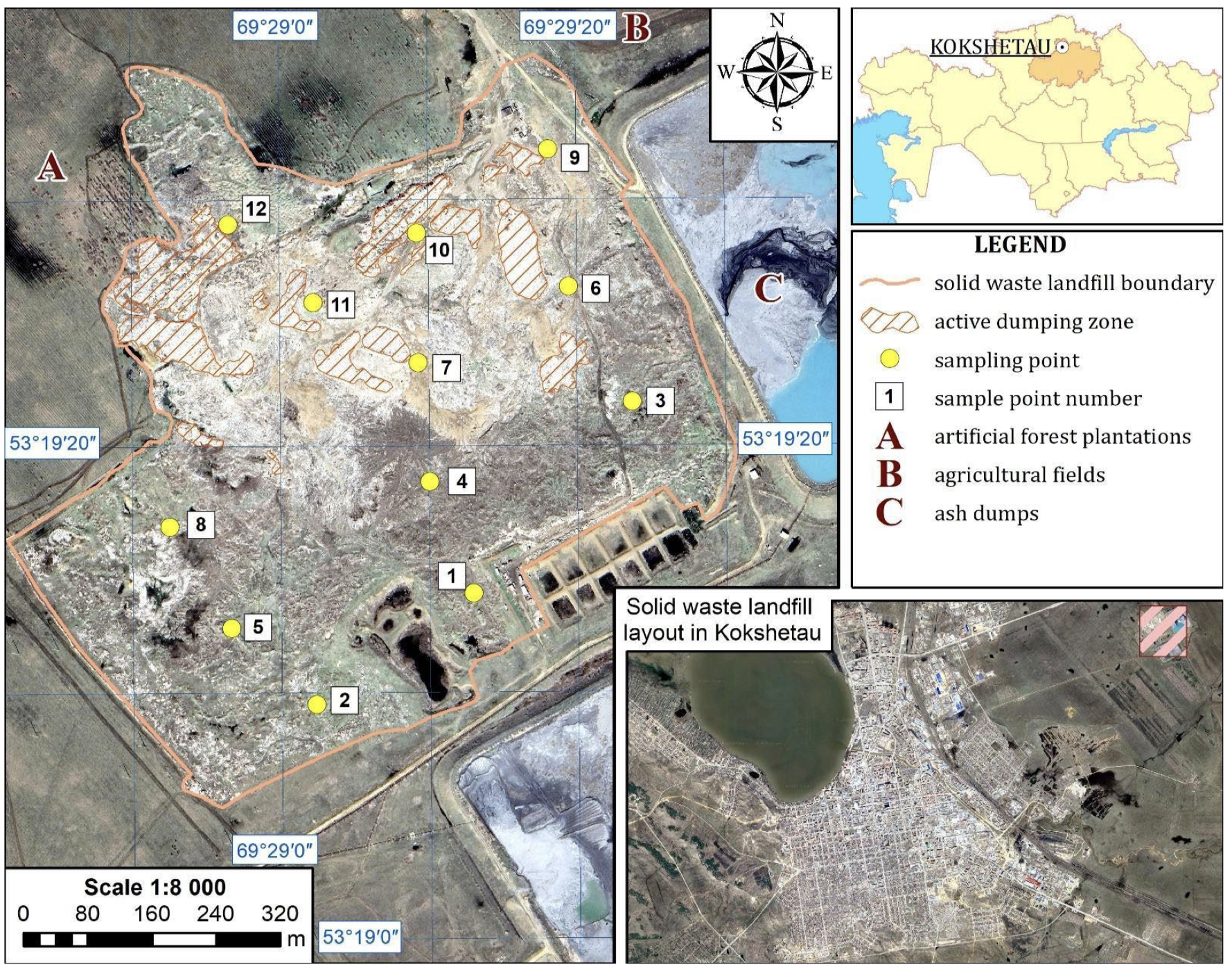
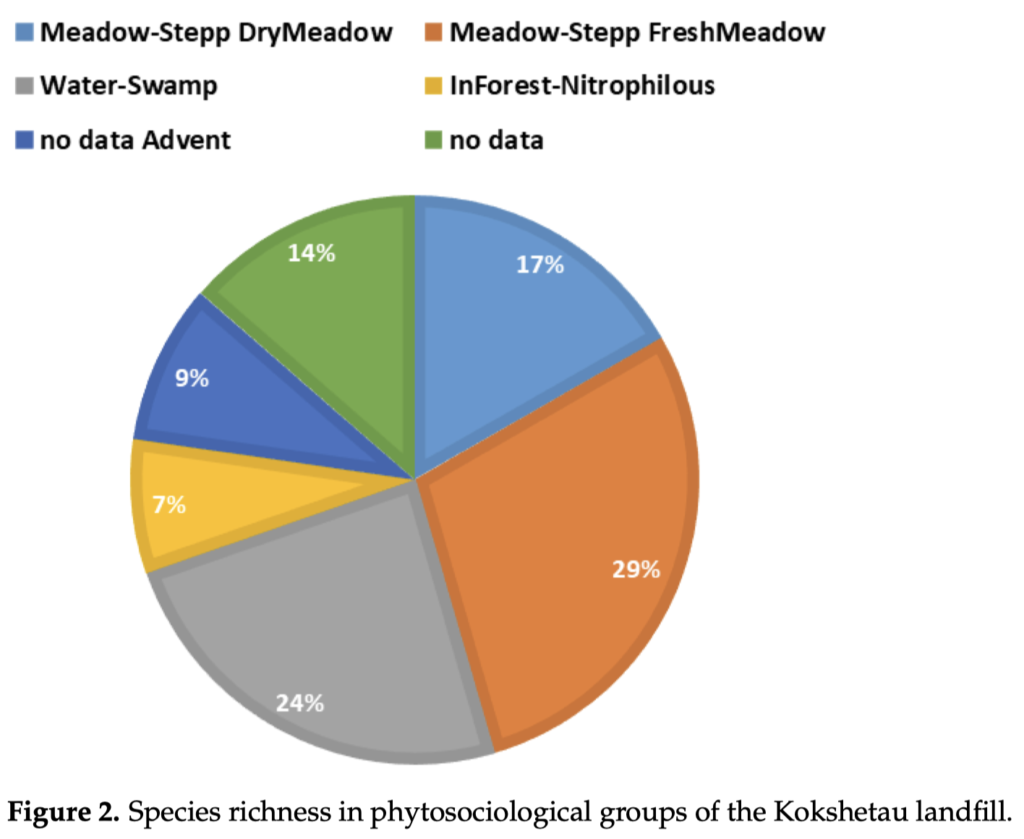
Based on field surveys (August–September 2024) across 12 sampling sites representing actively disturbed zones (ongoing unauthorized dumping) and abandoned sectors, the authors recorded 76 vascular plant species. The plant community was dominated by annual herbaceous taxa typical of disturbed environments, with Asteraceae and Poaceae as the most species-rich families.
The paper translates ecological diagnostics into actionable restoration guidance. It identifies candidate taxa and functional groups for phytoremediation-oriented restoration, while explicitly applying a risk/governance filter (e.g., invasiveness potential, allergenic pollen, and management feasibility). Two dominant species—Artemisia absinthium and Bassia scoparia—are discussed as potential candidates based on in-situ performance and literature-reported traits, while noting limitations (e.g., allergenicity and invasive tendencies, respectively).
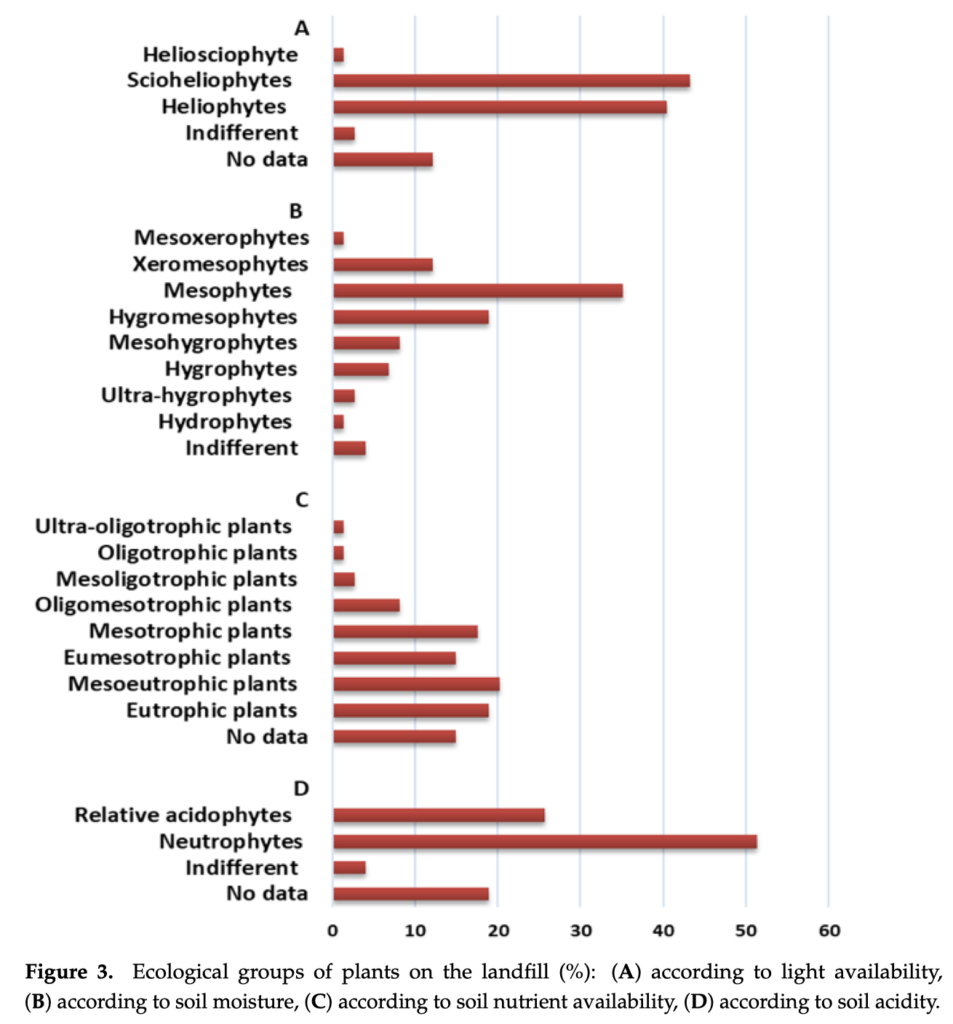 Overall, the study provides a practical template for monitoring, zoning, and species selection on closed or partially closed landfills in semi-arid steppe regions, supporting the broader LESLIE objective of strengthening applied environmental capacities and sustainable land management approaches.
Reference (as published)
Bayazitova, Z.E.; Safronova, N.M.; Kurmanbayeva, A.S.; Pozsgai, G.; Zhaparova, S.B.; Yessenzholov, B.Kh.; Bogapov, I.M.; Rodrigo-Clavero, M.-E.; Rodrigo-Ilarri, J. (2026). Vegetation Structure and Disturbance Drivers on a Closed Municipal Solid Waste Landfill in Kokshetau (Akmola Region, Kazakhstan). Sustainability, 18, 1901. https://doi.org/10.3390/su18041901