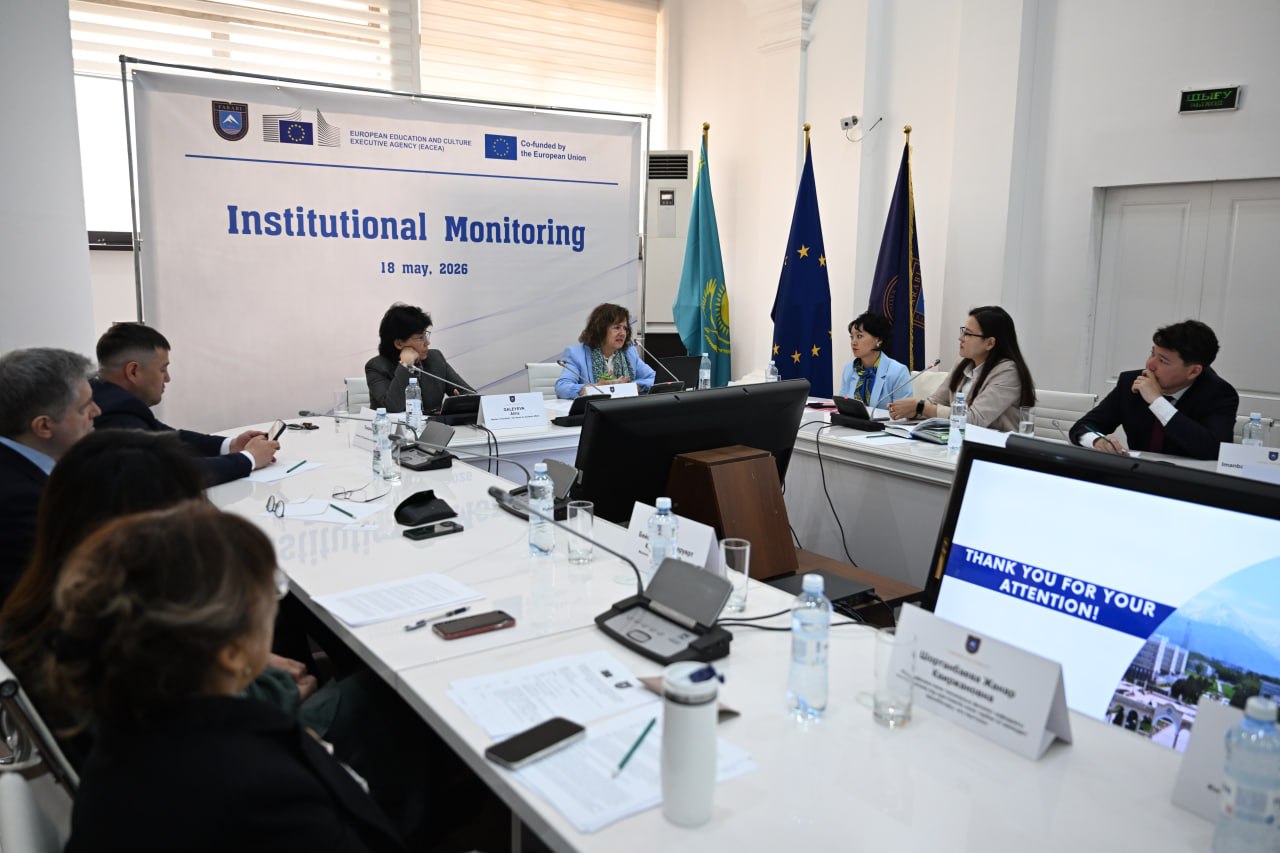
On May 18, 2026, Al-Farabi Kazakh National University successfully hosted an Institutional Monitoring Visit by Maria-Sol Domínguez Parrado, Project Officer at the European Education and Culture Executive Agency (EACEA). This comprehensive evaluation served as a strategic platform to review the implementation and institutional impact of European Union cooperation initiatives within the Capacity-Building in Higher Education (CBHE) framework. A central element of the official working session was the presentation of detailed monitoring reports on projects al-Farabi KazNU. Crucially, a highly detailed progress and monitoring report for the ongoing ERASMUS-EDU-2023-CBHE project LESLIE (Land Management, Environment and Solid Waste: Inside Education and Business in Central Asia, Project Number: 101129032) was jointly prepared and presented by Zhanar Shortanbayeva, the National Coordinator of the project in Kazakhstan, alongside key project staff member Guldana Minzhanova.
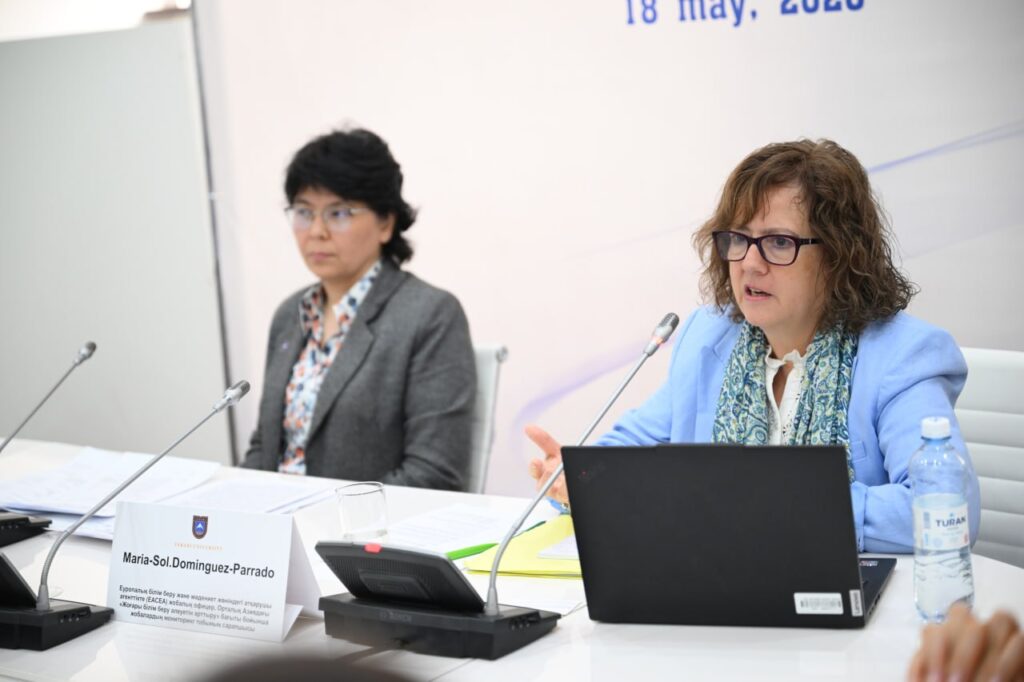
The presentation provided a thorough overview of the LESLIE project’s structure, current progress, and key results. As a 36-month initiative (running from January 1, 2024, to December 31, 2026), LESLIE unites a powerful international consortium of 14 partners across three EU nations (Spain, Italy, Cyprus) and two Central Asian countries (Kazakhstan and Uzbekistan), with Javier Rodrigo Ilarri serving as the European General Coordinator. The report detailed the successful execution of the project’s foundational Work Packages, specifically highlighting the institutional integration within WP1 (Project Management and Quality Assurance), WP2 (SLM International Hub), and WP3 (Future Learning Incubator).
The university team demonstrated that critical milestones have been met in compliance with the project’s strict Quality Assurance Plan, including the completion of key deliverables such as the SLM Hub Questionnaire (Deliverable 2.1), the list of potential SLM members (Deliverable 2.2), comprehensive questionnaire reports, and the structural frameworks for the Future Learning Incubator using a multidisciplinary STEHEAM approach. The report placed special emphasis on the current results of WP4 (SLM Micro-credentials), which represents the core academic output of the initiative.
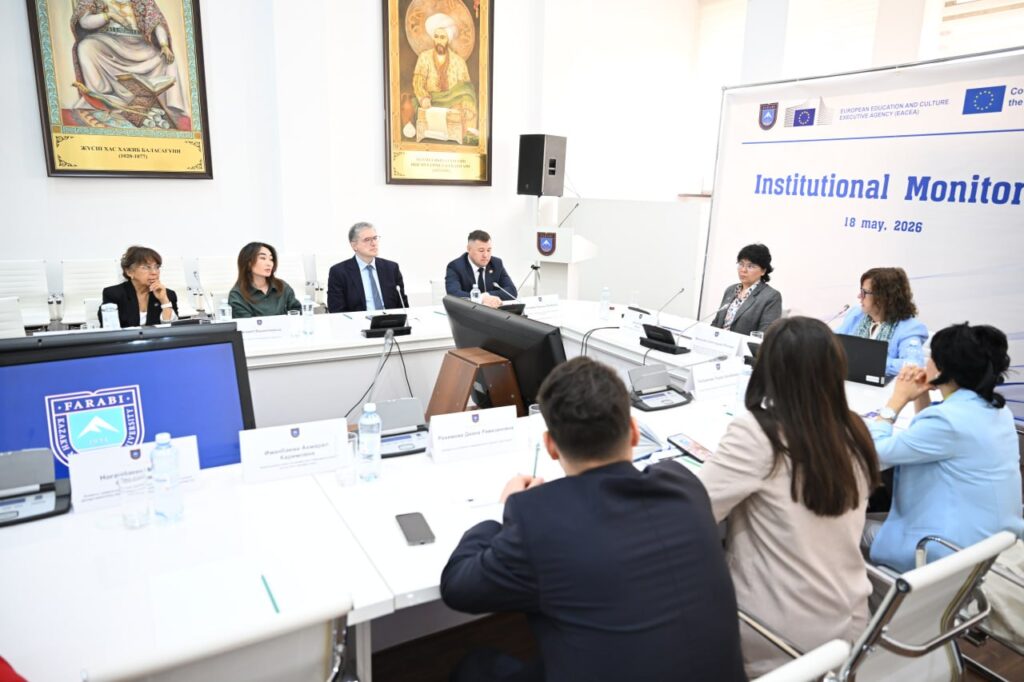 The international team is currently engaged in intensive, collaborative teamwork to develop and finalize a comprehensive catalogue of eight specialized Micro-credentials totaling 33 ECTS credits. These flexible, market-oriented courses are specifically designed to update BSc and MSc curricula across Central Asian universities while meeting the strict international standards of regulators and industries. The curriculum structure encompasses vital regional topics, including Circular Economy for Land and Waste Management (led by Koksu University), Climate Change for Sustainable Land Management (led by Bukhara State University), Solid Waste Management and Recycling (led by the Tashkent Institute of Irrigation and Agricultural Mechanization Engineers), and Water Management for Sustainable Land Management, which is directly led by Al-Farabi Kazakh National University.
This joint academic development is tightly integrated with the creation of digital educational tools and an Online SLM Repository Toolbox (WP5) to facilitate online learning and wide-scale dissemination (WP6). The EACEA monitoring officer highly commended the synergy between the completed EduEnvi project and the active implementation of the LESLIE project, praising the high level of stakeholder engagement achieved through successful regional workshops and dissemination newsletters. Sincere gratitude is extended to Maria-Sol Domínguez Parrado for her invaluable insights and unwavering support of these academic endeavors. Special recognition is given to the European General Coordinator, Javier Rodrigo Ilarri, for his exceptional leadership of the international consortium, and to Laura Paluanova for her flawless coordination of the Erasmus+ program in Kazakhstan. The success of this monitoring visit underscores the university’s alignment with international standards.
Find more info at https://farabi.university/news/105600?lang=en